
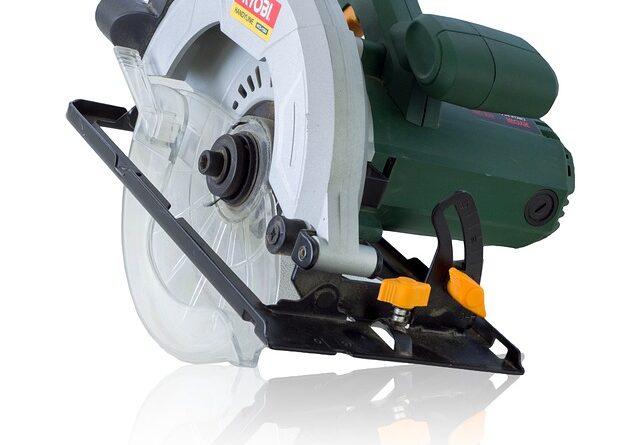
Can A Circular Track Saw Deliver The Same Precision As A DeWalt Circular Saw
Can You Use Your DeWalt Circular Saw As A Track Saw? Here’s What Users Say
Many professionals wonder if a DeWalt circular saw can truly perform like a circular track saw. The short answer is yes, but with conditions. While both tools share similar cutting mechanics, the track saw’s integrated guide rail system delivers unmatched precision for sheet materials. A DeWalt circular saw, on the other hand, offers flexibility and raw power for diverse jobsite tasks. When paired with compatible guide rails or aftermarket tracks, it can mimic a track saw’s accuracy in many applications—though not entirely replace it. The choice depends on project type, tolerance needs, and workflow priorities.
Design And Engineering Comparison
Before comparing performance, it’s essential to look at how each tool is built. The engineering behind a circular track saw and a DeWalt circular saw reveals why they excel in different areas of carpentry and construction.
A Circular Track Saw Integrates A Guide Rail System For Controlled, Linear Cuts
A circular track saw is engineered with an integrated guide rail that locks the blade’s path along a fixed line. This design eliminates lateral drift and allows clean, straight cuts through large panels like MDF or plywood. The rail’s rubberized strips also prevent surface movement, improving both safety and accuracy during long rip cuts.
The DeWalt Circular Saw Is Built For Versatility Across Various Materials And Angles
The DeWalt circular saw focuses on versatility. Its open-base design supports freehand operation across framing lumber, decking boards, or even metal sheets when fitted with the right blade. Adjustable bevel settings allow angled cuts up to 57 degrees on some models, making it ideal for framing or roofing tasks where flexibility outweighs precision.
Differences In Blade Housing, Plunge Mechanisms, And Base Plates Influence Precision
Track saws typically feature enclosed blade housings and plunge mechanisms that let users start cuts mid-panel without exposed teeth contacting the surface prematurely. The base plate glides over the track with minimal friction. By contrast, a standard DeWalt circular saw relies on manual positioning; its exposed blade guard retracts as it engages material, which can slightly affect alignment during longer cuts.
Mechanical Components That Affect Cutting Accuracy
Cutting accuracy depends not just on design but also on how mechanical components interact under load and motion.
Track Saws Rely On Low-Friction Glide Systems To Maintain Consistent Alignment
Track saw rails use low-friction glide pads or rollers to maintain consistent contact between the base plate and guide edge. This system ensures repeatable accuracy across multiple passes without recalibration. Even slight pressure variations from the operator have minimal impact on cut trajectory.
Circular Saws Depend On Manual Guidance, Which May Introduce Slight Deviations
Without a track system, a DeWalt circular saw depends entirely on steady hand control and visual guidance along pencil lines or chalk marks. Skilled tradespeople can achieve impressive results this way, though small deviations are inevitable when cutting lengthy panels by hand.
Blade Stability, Motor Torque, And Vibration Control Determine Cut Smoothness
Both tools rely heavily on motor torque consistency and vibration damping to maintain smooth edges. Track saws often include soft-start motors that reduce kickback at startup. DeWalt circular saws emphasize torque delivery for dense materials but may transmit more vibration through the handle during prolonged use.
Evaluating Precision In Real-World Applications
Precision isn’t theoretical—it shows up in real projects where repeatability matters more than speed.
How Track Guidance Influences Cut Quality
The guided system of a circular track saw minimizes lateral movement throughout operation. Precision rails guarantee straight cuts with crisp edges free from tear-out—a critical factor when trimming cabinet panels or laminate sheets where surface finish matters most. Because operator input is reduced to guiding motion along the rail, consistency across multiple identical pieces improves dramatically.
Performance Of A DeWalt Circular Saw Without A Track System
A practiced carpenter using a DeWalt circular saw can still reach near-track quality results through careful setup—marking lines accurately and maintaining even feed pressure throughout the cut. However, fatigue or uneven pressure may cause minor wander along longer cuts. Using auxiliary guides such as clamped straight edges helps control deviation but adds setup time to each pass.
Variations In Pressure Or Angle Can Slightly Affect The Final Cut Line
Even slight wrist rotation or varying downward force changes how the blade enters material fibers. Over several feet of cut length, these micro-adjustments accumulate into visible deviation from intended lines—especially noticeable in fine woodworking applications like furniture joinery or cabinet fitting.
Adapting A DeWalt Circular Saw For Track Saw Functionality
Some professionals prefer adapting existing tools rather than investing in specialized equipment outright.
Before doing so, understanding compatibility requirements helps avoid misalignment issues that could compromise safety or accuracy.
Compatibility With Aftermarket Guide Systems
Several aftermarket manufacturers produce universal tracks designed to fit standard circular saw shoes—including those from DeWalt. Fitting typically requires adjusting shoe width or adding adapter plates to secure proper engagement with track grooves. Users should always verify parallel alignment between blade edge and guide channel before extended use; even small offsets can cause drift over long cuts.
Modifications And Accessories That Enhance Precision
Parallel Guides And Edge Clamps
Parallel guides attach directly to the base plate to maintain consistent offset distances from workpiece edges during repetitive rip cuts—useful when processing multiple identical boards for shelving or trim installations.
Custom Base Plates And Adapters
Upgrading to thicker custom base plates reduces flex under load while improving slide stability over makeshift tracks or clamped guides. Some woodworkers fabricate aluminum adapters that replicate true track interfaces for smoother motion without full conversion kits.
Comparing Material Handling Capabilities And Cut Depth Control
Material type often dictates whether precision or cutting depth takes priority.
Depth Adjustment Mechanisms In Both Tools
Track saws feature calibrated depth scales accounting for rail thickness—ensuring precise penetration without damaging surfaces beneath sheet goods. In contrast, DeWalt circular saws require manual depth calibration before each cut type since there’s no automatic compensation for guide height variations when used with third-party tracks.
Influence On Material Types And Thicknesses
Circular track saws excel at slicing thin sheet goods like MDF or veneered plywood cleanly without chipping fragile layers thanks to fine-tooth blades and guided feed control. Meanwhile, DeWalt circular saws handle thicker lumber efficiently due to higher torque output and larger blade diameters suitable for structural framing tasks where minor tear-out is acceptable.
Assessing Efficiency, Safety, And Workflow Integration
Tool selection also impacts jobsite productivity and worker safety protocols—a key consideration in professional environments governed by occupational standards such as ISO 12100 for machinery safety principles.
Operational Efficiency In Professional Settings
In cabinetry shops or flooring installations requiring repetitive precision cuts, track saw systems streamline workflow by removing frequent recalibration steps between passes. Conversely, framing crews benefit more from portable DeWalt circular saws capable of quick adjustments across varied materials without disassembling tracks between locations.
Safety Considerations During Precision Cutting Tasks
Track saws generally include enclosed guards with integrated dust ports connecting directly to vacuum extractors—improving visibility while reducing airborne particulates below recommended exposure limits outlined by OSHA woodworking guidelines. Standard DeWalt models require separate attachments for equivalent dust management efficiency but remain safe when operated with proper PPE and stable support surfaces.
Expert Perspectives On Choosing Between Both Tools For Precision Workflows
Choosing between these tools ultimately reflects project demands rather than brand loyalty alone.
Professionals weigh cost efficiency against tolerance expectations before deciding which approach best aligns with their workflow habits and production scale.
Factors That Influence Tool Selection Among Professionals
Cabinetmakers prioritizing sub-millimeter tolerances often favor guided systems for their repeatable linear accuracy across large panels. Structural carpenters working outdoors value portability and raw power instead since framing tolerances allow wider margins of error without compromising structural integrity.
Balancing Cost, Portability, And Accuracy Requirements
Track systems represent higher upfront investment due to proprietary rails and accessories but repay over time through reduced rework rates in high-precision production settings. A standalone DeWalt circular saw remains cost-effective for general contractors needing one versatile tool adaptable across diverse site conditions—even if achieving perfect straightness occasionally demands extra effort or jigs.
FAQ
Q1: Can a DeWalt circular saw be safely used on a third-party track?
A: Yes, provided alignment is verified before each use and shoe dimensions match the rail profile securely without play that could cause drift during operation.
Q2: Does using a guide rail void manufacturer warranties?
A: Typically not if modifications are non-permanent; however, users should confirm warranty terms specific to their model before altering factory components.
Q3: What materials benefit most from using a true track saw?
A: Veneered plywoods, laminates, MDF panels—any material where surface finish quality is critical—see significant gains in edge cleanliness when cut via guided systems.
Q4: Are there any risks converting a standard circular saw into a pseudo-track setup?
A: Improper alignment or unstable clamping poses kickback hazards; always test setups on scrap material first under controlled conditions before production work begins.
Q5: Which tool offers better long-term value for professional workshops?
A: For high-volume cabinetry or millwork operations emphasizing precision consistency over flexibility—a dedicated track system pays off faster; general contractors gain more utility per dollar from robust portable models like those by DeWalt.