
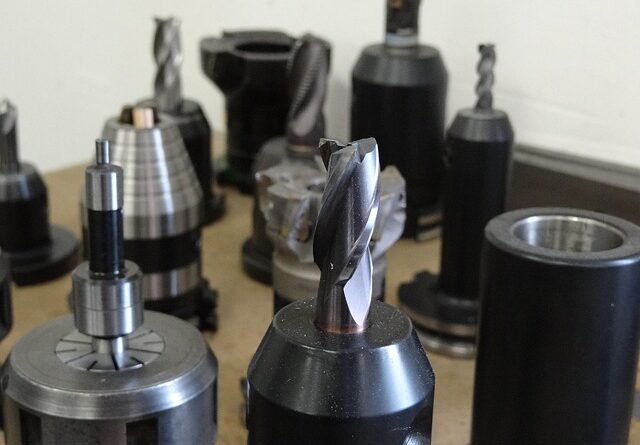
Can Milling Machine Cutters Improve Machinability in TiAlN and PCD Coatings
Machinability and ANN Based Prediction of Surface Roughness for TiAlN and PCD Coated End Mill Cutters on AA6061 Hybrid Composite
Machining AA6061 hybrid composites with coated milling machine cutters requires balancing tool wear, heat generation, and surface finish. Among coating materials, Titanium Aluminum Nitride (TiAlN) and Polycrystalline Diamond (PCD) show distinct behaviors in thermal resistance and hardness. TiAlN offers oxidation stability at high temperatures, while PCD provides extreme hardness and low friction. Artificial Neural Network (ANN) models can predict surface roughness based on cutting conditions, helping engineers select optimal parameters. The results consistently show that PCD-coated cutters outperform TiAlN in surface integrity but require higher initial investment.
The Concept of Machinability in Metal Cutting
Machinability defines how easily a material can be cut while maintaining desired accuracy and tool life. It depends on multiple parameters including cutting force, chip formation, tool wear rate, and resulting surface finish.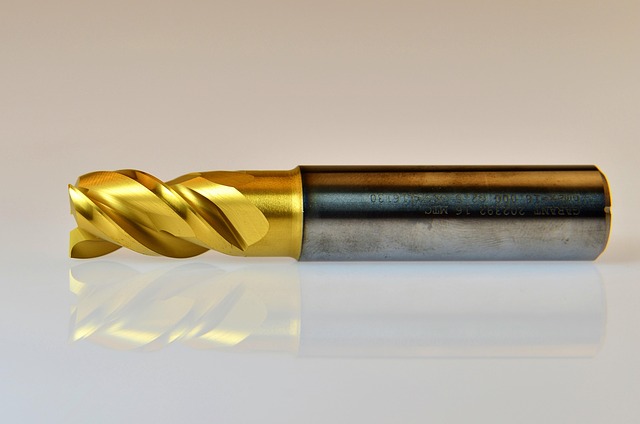
Definition and Parameters Influencing Machinability
Machinability is often evaluated through measurable indicators such as cutting temperature, chip morphology, and energy consumption during milling. A material with low cutting forces and slow tool wear is considered more machinable. For AA6061 composites reinforced with ceramic particles, machinability tends to decrease due to abrasive interactions between the cutter and reinforcement phases.
Importance of Coating Materials in Enhancing Machinability
Coatings serve as a protective barrier between the cutting edge and workpiece. TiAlN coatings improve oxidation resistance up to 800°C, while PCD coatings maintain sharpness even beyond 1000°C. These coatings reduce frictional heating and delay adhesive wear during high-speed milling operations.
Relationship Between Workpiece Material Properties and Cutter Performance
The mechanical properties of the workpiece—particularly hardness, ductility, and thermal conductivity—directly influence cutter performance. In hybrid composites like AA6061 reinforced with SiC or Al₂O₃ particles, the hard inclusions accelerate abrasive wear on uncoated tools but are better managed by coated cutters designed for high-stress contact zones.
Characteristics of TiAlN and PCD Coatings
Coating technology determines how effectively a milling cutter resists wear under demanding conditions. TiAlN and PCD represent two ends of the spectrum: one optimized for toughness, the other for hardness.
Composition and Structure of Titanium Aluminum Nitride (TiAlN) Coatings
TiAlN is a solid solution of titanium nitride and aluminum nitride formed through physical vapor deposition. The aluminum content enhances oxidation resistance by forming a stable Al₂O₃ layer at elevated temperatures. This makes it suitable for dry or semi-dry machining where coolant use is limited.
Polycrystalline Diamond (PCD) Coatings and Their Mechanical and Thermal Advantages
PCD coatings consist of diamond grains sintered together under high pressure. They exhibit exceptional hardness (up to 8000 HV) and extremely low friction coefficients. Their thermal conductivity helps dissipate heat rapidly from the cutting zone, reducing thermal cracking risks during high-speed milling.
Comparative Analysis of Coating Hardness, Adhesion, and Thermal Stability
While TiAlN offers superior adhesion to carbide substrates due to its metallic bonding nature, PCD surpasses it in hardness by nearly fourfold. However, TiAlN withstands higher impact loads without chipping. In prolonged operations on AA6061 composites, PCD demonstrates lower flank wear but demands precise alignment due to its brittle nature.
Influence of Milling Machine Cutters on Surface Integrity
Surface integrity after milling affects fatigue strength, corrosion resistance, and dimensional accuracy. Cutter geometry plays an equally vital role as coating type in determining these outcomes.
Role of Cutter Geometry in Machining Performance
Rake angle influences chip flow direction; a positive rake reduces cutting forces but may weaken edge stability. Clearance angle prevents rubbing between the flank face and machined surface. Helix design controls chip evacuation—higher helix angles favor smoother finishes when machining ductile alloys like AA6061.
Influence of Tool Geometry on Heat Dissipation and Tool Life
Optimized flute geometry enhances airflow around the cutter edges, promoting cooling during dry machining. Tools with variable helix patterns distribute vibration frequencies unevenly, extending tool life by reducing chatter-induced microfractures.
Optimization Strategies for Coated End Mills to Improve Surface Quality
Selecting proper feed per tooth relative to cutter diameter minimizes built-up edge formation on coated tools. For example, increasing cutting speed slightly above critical velocity can polish the machined surface instead of tearing it.
Surface Roughness Behavior in Machining AA6061 Hybrid Composites
Surface roughness arises from combined effects of mechanical deformation, material removal mode, and vibration amplitude during cutting.
Factors Affecting Surface Roughness During Milling Operations
Feed rate has the strongest influence: higher feed increases scallop height between tool passes. Depth of cut also contributes by altering chip load per tooth. Additionally, coating type modifies frictional behavior at the interface.
Correlation Between Coating Type, Cutting Speed, and Feed Rate With Surface Finish
At moderate speeds (around 200 m/min), TiAlN-coated tools produce acceptable finishes; however, at higher speeds (>400 m/min), their oxidation layer thickens unevenly causing micro-scratches. PCD-coated tools maintain consistent Ra values below 0.4 µm across varying feeds due to superior thermal control.
Influence of Reinforcement Particles in Hybrid Composites on Cutter Wear Mechanisms
Reinforcement particles act as micro-abrasives that erode tool edges through ploughing action. The harder these particles are relative to the matrix alloy, the faster flank wear develops unless mitigated by advanced coatings like PCD or nanocomposite layers combining diamond-like structures with nitrides.
Comparative Analysis: TiAlN vs PCD Coated End Mill Cutters
Comparing these two coatings under identical conditions reveals trade-offs between cost efficiency and performance longevity.
Performance Evaluation Under Varying Cutting Conditions
At lower feed rates