Pride outfit ideas for parades, parties and everyday celebrations
Start with the event, not just the rainbow
The best pride outfit ideas start with the setting: a long outdoor march, a park festival, a club night, brunch, a workplace event or a casual neighborhood gathering. Pride style can be expressive, but it still needs to work in heat, crowds, long walks, photos and changing plans. A strong outfit usually balances three things: visible color or symbolism, practical comfort and a silhouette that feels like your own style.
Pride Month is widely celebrated in June in the United States to honor the June 1969 Stonewall Uprising, while many cities also hold LGBTQ+ events at other times of year. That makes flexibility important. Your outfit may need to handle summer sun, cooler evening weather and different local dress codes in the same day.
For more seasonal styling inspiration beyond Pride, browse the Outfit Ideas section for wearable combinations that can be adapted with color, accessories and layering.
Pride outfit ideas by event type
A parade outfit and a party outfit can use the same colors, but they ask for different choices. At a march, shoes, breathable layers and a secure bag matter more than a dramatic heel or delicate fabric. At a party, texture, shine and bolder shapes can carry more of the look. Start with the setting, then decide how colorful or statement-making you want to be.
| Event | Outfit direction | Practical detail |
|---|---|---|
| Outdoor parade or march | Rainbow tank, denim shorts, lightweight overshirt and sneakers | Choose broken-in shoes, sunscreen-friendly layers and a hands-free bag |
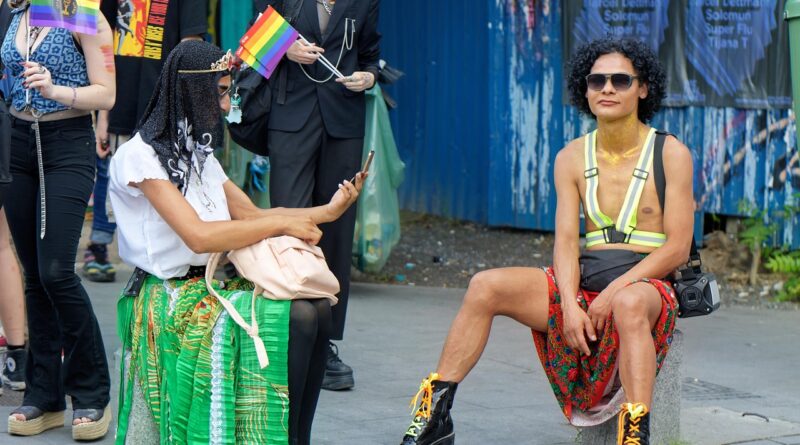
| Street festival | Printed mesh top, relaxed trousers, bucket hat and colorful sunglasses | Go for breathable fabric and pockets if you will be outside for hours |
| Pride brunch | Bright button-down, linen pants, sandals or loafers | Keep it polished but relaxed enough for walking afterward |
| Club night or after-party | Metallic top, black jeans, platform boots or statement sneakers | Prioritize secure closures, movement and a layer for the trip home |
| Work or school celebration | Neutral base with rainbow pin, scarf, socks or subtle stripe | Let one accessory carry the theme if the setting is more conservative |
| Low-key gathering | Graphic tee, wide-leg jeans and one pride-color accessory | Comfort can still feel intentional with good proportions |
How to wear rainbow colors without looking overdone
Rainbow dressing is the clearest visual shortcut for Pride, but it works best when the outfit has structure. One simple formula is to start with a neutral base, add one rainbow piece and repeat one color in your accessories. A white tank, light-wash jeans, rainbow belt and red sunglasses feel cohesive because the color is concentrated rather than scattered across every item.
Another option is monochrome plus one symbolic accent. A full red, orange, yellow, green, blue or violet look can feel bold and modern, especially when the pieces vary in texture. Try a green ribbed tank with green cargo pants and silver jewelry, or a violet slip skirt with a lavender tee and white sneakers. The outfit still nods to Pride without relying only on flag prints.
If your wardrobe leans softer or more minimal, use pastel versions of the rainbow. Pale pink, butter yellow, sky blue and lilac can feel celebratory without being loud. This approach works well for daytime brunches, family-friendly events and settings where you want the styling to feel relaxed.
Use flag colors with care and intention
Pride fashion often draws from flags, and knowing the context helps the styling feel respectful rather than random. The Library of Congress describes LGBTQ+ Pride Month as a June observance connected to the 1969 Stonewall Uprising. GLAAD’s LGBTQ community calendar also marks June as Pride Month and June 28 as Stonewall Day. In fashion terms, that history is a reminder that Pride outfits are not only decorative; they are connected to visibility, community and protest.
The rainbow flag remains widely recognized, while the Progress Pride flag added a chevron to emphasize inclusion and progress. Museum and LGBTQ+ reference sources, including the Victoria and Albert Museum and Human Rights Campaign materials, identify Daniel Quasar’s 2018 Progress Pride flag as incorporating trans colors and black and brown stripes; the intersex-inclusive version later added yellow and purple elements associated with the intersex flag.
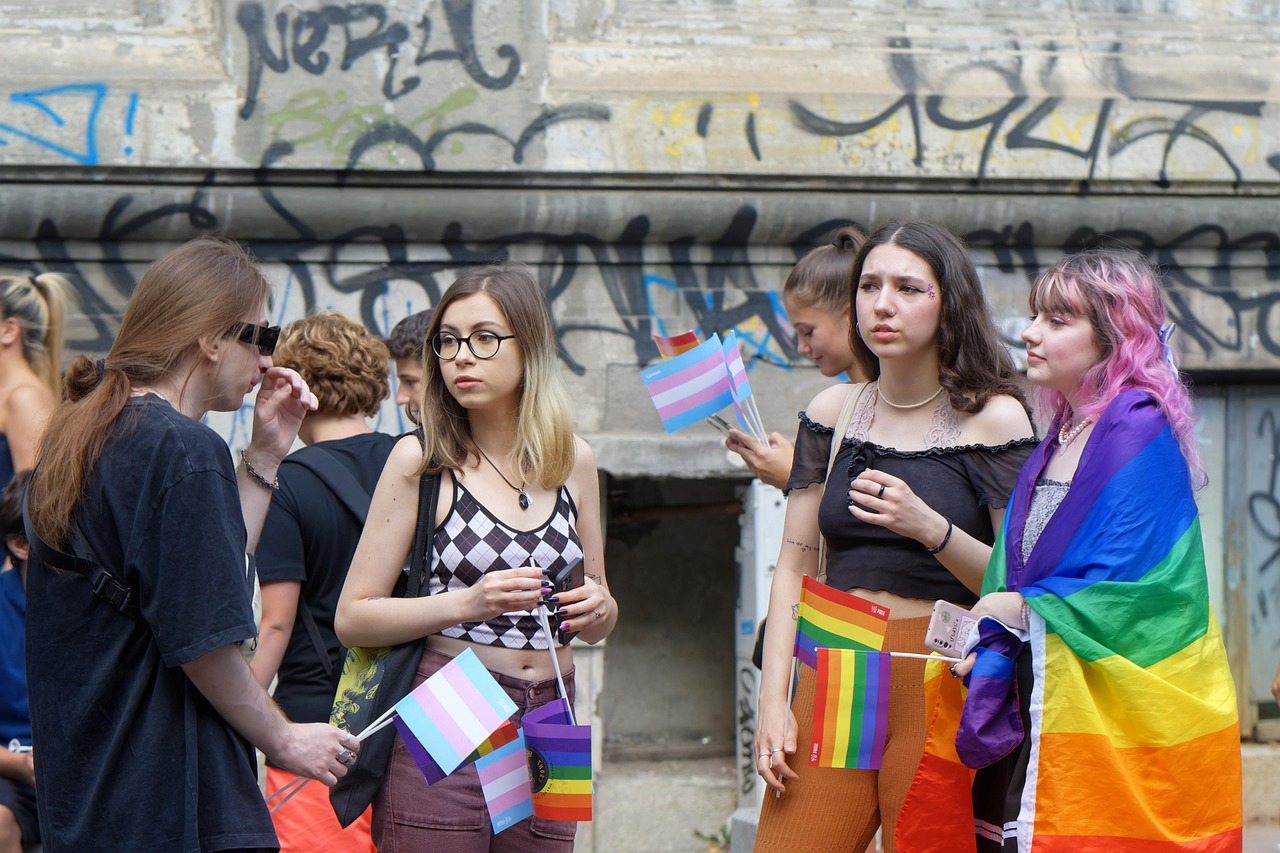
If you wear a specific flag palette, make the choice clear and considered. A pin, patch, nail color, bandana, earrings, shoelaces or coordinated makeup can communicate support without turning identity symbols into costume props.
For allies, a useful rule is to center support rather than spectacle. Wear something celebratory, but avoid treating Pride as a theme-party aesthetic detached from the people and history behind it. A simple tee, a flag pin, comfortable jeans and a sign may be more appropriate than an outfit designed only to attract attention.
Comfort matters because many Pride events are long outdoor days
Many major Pride events happen in June, and in much of the United States that can mean sun, humidity and long periods of standing. The Centers for Disease Control and Prevention advises loose, lightweight, light-colored clothing and more water than usual during extreme heat. The American Academy of Dermatology recommends broad-spectrum, water-resistant sunscreen with SPF 30 or higher and reapplying about every two hours when outdoors, especially after sweating.
Apply that guidance to outfit planning. Choose cotton, linen, moisture-wicking blends, mesh, open weaves or lightweight denim instead of heavy synthetic layers. If you want shine, consider a metallic bag, foil-print top or reflective sunglasses rather than a full plastic or vinyl outfit in direct sun. Boots can work if they are already comfortable for several miles; otherwise, sneakers, cushioned sandals or supportive platforms are safer choices.
- For heat: wear breathable fabrics, light colors and a hat or scarf that can shade your face.
- For walking: choose shoes you have already worn, and add blister protection before you leave.
- For crowds: use a crossbody, belt bag or small backpack that keeps your hands free.
- For weather changes: bring a light overshirt, packable rain layer or bandana.
- For photos: repeat one color in your outfit so the look reads clearly from a distance.
Outfit formulas you can build from your closet
Denim and a color statement
Denim is one of the easiest anchors for Pride because it gives the color piece room to stand out. Try relaxed jeans with a rainbow crochet top, denim shorts with a bright mesh tee, or a denim jacket covered in removable pins. For a cleaner version, wear straight-leg jeans, a white tee and one bold accessory such as a rainbow scarf, cap or belt.
A matching set with playful accessories
A matching set looks polished with little effort. A linen shirt and shorts set in pink, green, blue or yellow can work for both brunch and a street festival. Add playful accessories such as tinted sunglasses, colorful socks, charm jewelry or a mini bag. Matching sets are also easy to adjust through the day: wear the shirt open over a tank in the heat, then button it up when the temperature drops.
Sheer or mesh layers over a simple base
Sheer, mesh and open-knit pieces add visual interest without much weight. Wear a rainbow mesh top over a tank, a sheer printed shirt over a sports bra, or an open-knit sweater with shorts. The base layer matters. Choose something secure and appropriate for the event, especially if you will be moving through crowds or taking public transit. See also: Fashion Trends.
Monochrome color-blocking
If full rainbow styling feels too busy, choose one color and build a tonal outfit around it. Orange shorts with a rust tank, blue trousers with a cobalt shirt, or pink cargo pants with a pale pink tee can feel intentional and photogenic. Add a small rainbow or Progress Pride accessory to connect the look to the occasion.
Black base with high-impact details
A black base works well for evening Pride events. Black jeans, a black tank and boots become festive with glitter eyeliner, a metallic jacket, a rainbow chain belt or a bright bag. This formula is useful if your wardrobe is mostly neutral but you still want the outfit to feel event-ready.
Small details that make the outfit feel finished
Accessories often make the difference between simply wearing bright clothes and styling a Pride look. Sunglasses, bandanas, temporary tattoos, enamel pins, socks, hair clips, bracelets and nail colors can carry the theme while staying practical. If you are attending multiple events, accessories are also easier to swap than full outfits.
Makeup can be just as flexible. Rainbow liner, one bright shadow shade, glitter at the inner corner of the eye, colorful mascara or glossy lips can lift a simple outfit. If you expect heat or dancing, use long-wear formulas and keep blotting papers or a small powder in your bag. Hair accessories such as clips, ribbons, temporary color sprays or a printed scarf can add color without changing your clothes.
For bags, avoid anything you must constantly hold. A small crossbody, belt bag or compact backpack is usually better than a clutch. If the venue has a bag policy, check it before leaving. Clear bags can be styled with colorful pouches inside, turning a practical requirement into part of the outfit.
What to avoid when planning a Pride outfit
A good Pride outfit should feel expressive, not careless. Avoid shoes you have never tested, heavy fabrics in direct sun, face paint that may run into your eyes, and accessories that block other people’s view during a march or performance. Also avoid costumes that borrow from cultures, communities or identities you are not part of in a way that feels mocking, sexualized or detached from context.
It is also worth thinking about sustainability. You do not need to buy a head-to-toe disposable outfit for one day. Rewearable basics, secondhand pieces, borrowed accessories and removable patches can create a strong Pride look without becoming closet clutter. If you do buy something new, choose pieces you would wear again: colorful sneakers, a striped shirt, a linen set, a quality hat or jewelry that fits your daily style.
Frequently asked questions
What should I wear to my first Pride parade?
Wear something comfortable, colorful and easy to move in. A breathable top, denim or lightweight shorts, supportive shoes, sunglasses, sunscreen and a hands-free bag are a practical starting point. Add a rainbow or Pride flag accessory if you want a clear visual connection.
Can I wear a Pride outfit if I am an ally?
Yes, allies can wear supportive Pride colors or symbols, especially when the intention is respectful. Keep the focus on support, visibility and community rather than treating Pride as only a costume opportunity.
How do I make a Pride outfit subtle?
Start with your normal outfit and add one small signal: rainbow socks, a pin, nail color, a scarf, a tote, shoelaces or a bracelet. A subtle Pride outfit can still feel thoughtful when the colors are placed intentionally.
What shoes are best for Pride events?
Broken-in sneakers are the safest choice for parades, festivals and long walks. Cushioned sandals, supportive platforms or comfortable boots can work if you have worn them before and know they will not cause blisters.
Do Pride outfits have to be rainbow?
No. Rainbow is recognizable, but you can also wear a specific flag palette, one bold color, a graphic tee, metallic accents or a neutral outfit with meaningful accessories. The strongest look is one that feels authentic, respectful and practical for the event.