
Office outfit ideas for polished business casual days
A practical way to dress for today’s office
The best office outfit ideas now sit somewhere between traditional suiting and weekend casualwear. In many workplaces, the aim is not to look formal for its own sake. It is to look intentional, neat, and ready for the setting in front of you.
Recent workplace data helps explain why that balance matters. The U.S. Bureau of Labor Statistics reported in its 2025 American Time Use Survey that 35% of employed people did some or all of their work at home on days they worked. Gallup’s 2025 hybrid work analysis found that hybrid workers spent 46% of their workweek in the office, about 2.3 days. At the same time, a January 2025 Monster workplace poll found that many offices either have no formal dress code or lean business casual. The practical takeaway: a work wardrobe should move from desk work to meetings, commuting, and video calls without requiring a full outfit change.
Start with the dress code, not the trend
Before choosing a blazer, sneaker, dress, or trouser, read the room. Office style depends heavily on industry, location, client exposure, seniority, and company culture. A tech startup, a law firm, a design agency, a school office, and a finance team may all use the words business casual, but they rarely mean the same thing.
A useful test is to ask three questions: do employees meet clients in person, do senior leaders dress more formally than the rest of the team, and are jeans or sneakers common on normal workdays rather than only on Fridays? If all three answers point to a relaxed environment, softer tailoring, dark denim, clean sneakers, knitwear, and polished flats may fit well. If the office is conservative or client-facing, keep the foundation sharper: structured jackets, pressed trousers, closed-toe shoes, refined blouses, button-down shirts, sheath dresses, midi skirts, and minimal accessories.
| Office signal | What it usually means | Outfit idea |
|---|---|---|
| No written dress code, but leaders dress neatly | Casual is accepted, but polish still matters | Knit blazer, straight trousers, simple tee, loafers |
| Business casual policy | Professional separates are safer than trend-heavy looks | Button-down shirt, pleated trousers, belt, flats or derbies |
| Client meetings or presentations | Clarity and authority matter more than personal experimentation | Blazer, tailored pants or midi skirt, blouse, closed-toe shoes |
| Creative or fashion-adjacent workplace | Personality is welcome if the silhouette stays considered | Column skirt, refined knit, statement earrings, sleek boots |
| Hybrid work with commute days | Comfort and repeatable combinations are essential | Wrinkle-resistant trousers, layered knit, light jacket, commuter tote |
Reliable office outfit formulas
Strong work outfits are easier to build when you repeat formulas instead of starting from scratch each morning. The pieces can change by season, color, or personal style, while the structure stays consistent. These combinations suit many modern offices.
Blazer, knit top, and tailored trousers
This is a reliable default for anyone who wants to look polished without wearing a full suit. A soft blazer adds structure, a knit top keeps the outfit comfortable, and tailored trousers make the look office-ready. Choose straight-leg, tapered, or wide-leg trousers based on your proportions and shoe choice. In a conservative office, navy, black, charcoal, camel, and ivory are safe options. In a more creative team, olive, chocolate, muted burgundy, or soft blue can still look professional.
Button-down shirt, dark denim, and loafers
Dark denim can work in offices where jeans are accepted, but the wash and styling matter. Choose a clean, non-distressed pair in a straight, slim-straight, or trouser-like cut. Add a crisp shirt, leather belt, and loafers so the outfit does not feel too casual. If you are unsure whether denim is acceptable, try this combination on a low-stakes day before wearing it to a meeting.
Midi dress and structured layer
A midi dress is one of the easiest one-piece office outfits because it reduces decision fatigue. The most versatile versions have a simple neckline, enough coverage for sitting and walking, and fabric that does not cling too tightly. Add a blazer, cardigan jacket, or tailored vest when you need more authority. Boots, loafers, slingbacks, or low block heels can all work, depending on the season.
Monochrome separates with one texture change
Wearing one color family creates immediate polish. Try black trousers with a black fine-gauge knit, cream pants with an ivory blouse, or navy trousers with a navy cardigan. To avoid a flat look, change the texture: wool trousers with a silk-touch blouse, cotton poplin with leather shoes, or a ribbed knit with smooth suiting fabric. This formula is especially useful on busy mornings because it looks deliberate even when the pieces are simple.
Column skirt, sweater, and sleek shoes
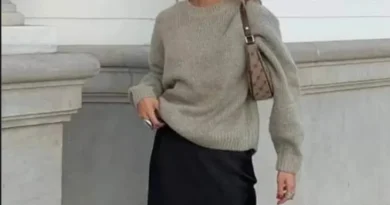
A column skirt, whether in ponte, suiting fabric, satin-finish material, or structured knit, gives a clean line without feeling overly formal. Pair it with a crewneck sweater, tucked blouse, or fine cardigan. Keep the hem appropriate for your office, and check how the skirt behaves when you sit, climb stairs, or commute. A simple boot, loafer, or pointed flat usually completes the outfit better than a very casual sandal.
How to adapt outfits for hybrid and commute days
Hybrid schedules have changed what a good work outfit needs to do. On an office day, you may commute, take video calls, sit at a desk, join an in-person meeting, and run errands after work. A useful outfit has to hold its shape through all of that.
For commute-heavy days, prioritize fabrics that resist wrinkles and shoes you can walk in confidently. A comfortable office outfit can still look sharp when the fit is deliberate. Try stretch-wool trousers with a fine knit, a longline cardigan over a blouse, or a shirt dress with a belt and low boots. If your commute involves weather changes, build the outfit around layers rather than one heavy piece.
For video-heavy days in the office, focus on the upper half: neckline, color near the face, neat hair or grooming, and a layer that frames the shoulders. A polished knit polo, open-collar shirt, cardigan jacket, or blazer can read clearly on camera without feeling stiff at your desk. Avoid tops that only look good standing up; office outfits also have to work while seated.
For days with uncertain plans, use the upgrade rule. Start with a comfortable base, then add one piece that elevates it. A tee becomes office-ready under a blazer. A knit set becomes more professional with loafers and a structured bag. Wide-leg pants become presentation-appropriate with a tucked blouse and belt. In many cases, you do not need more clothes; you need more control over the combinations.
Seasonal office outfit ideas
Seasonal dressing for work is less about chasing trends and more about managing temperature, fabric weight, and coverage. The best office pieces keep you comfortable outside while still looking appropriate under fluorescent lights, air conditioning, heating, and long meetings.
Spring office outfits
Spring is ideal for lighter layers. Try a trench coat over cropped trousers and a striped knit, or a pale blue shirt with cream trousers and loafers. Midi skirts work well with lightweight sweaters, especially when the weather is too unpredictable for bare arms all day. Soft colors can feel fresh, but keep at least one grounding neutral so the outfit still reads professional.
Summer office outfits
Summer office dressing is a balance between heat and workplace coverage. Breathable fabrics such as cotton, linen blends, lightweight wool, and poplin can help, but very sheer or beach-like pieces may feel wrong indoors. Try a sleeveless shell under a blazer you can remove at your desk, wide-leg trousers with a crisp short-sleeve shirt, or a structured midi dress with closed-toe flats. If sandals are allowed, choose refined pairs rather than vacation styles. See also: Fashion Trends.
Fall office outfits
Fall is often the easiest season for polished workwear. Layer fine knits under blazers, wear loafers with tailored trousers, and bring in richer colors such as espresso, burgundy, forest green, camel, and charcoal. A suede-look belt, textured bag, or subtle plaid trouser adds interest without becoming distracting. This is also a good season to build repeatable uniforms because layering makes the same base pieces feel new.
Winter office outfits
Winter outfits need warmth without bulk. Choose thin thermal layers where needed, then add wool trousers, knit dresses, tall boots, structured coats, and scarves that can be removed indoors. Avoid relying on oversized hoodies unless your office clearly accepts them. A turtleneck under a blazer, a sweater dress with boots, or wide-leg trousers with a fitted knit can feel warm and professional at the same time.
Build a small office capsule that actually works
A strong office wardrobe does not need to be large. It needs enough variety to cover your real workweek. If you go into the office two or three days a week, a compact capsule may be more useful than a crowded closet full of almost-right items.
Start with base pieces: two pairs of trousers, one skirt or dress, one dark denim option if your workplace allows jeans, three tops, one knit, one blazer or structured jacket, and two pairs of office-appropriate shoes. Then add one personality piece, such as a patterned blouse, colored cardigan, statement belt, or interesting bag. The personality piece keeps your outfits from feeling generic, while the base pieces do most of the work.
- Core colors: choose two neutrals, such as black and camel, navy and gray, or chocolate and cream.
- Accent colors: add one or two shades that flatter you and mix easily with the core colors.
- Fit standard: make sure waistbands, hems, shoulders, and sleeves allow sitting, walking, and layering.
- Shoe plan: keep at least one pair for walking days and one sharper pair for meetings.
- Care routine: favor pieces you can steam, wash, or maintain without constant dry cleaning.
If you need more styling inspiration beyond workwear, browse the Outfit Ideas section for more ways to combine everyday pieces into wearable looks.
Common office outfit mistakes to avoid
The most common mistake is confusing comfort with carelessness. Comfortable office outfits can include stretch, soft knits, sneakers, or relaxed silhouettes, but they still need clean lines, good condition, and the right context. Pilling, wrinkles, worn-out shoes, transparent fabrics, and overly tight fits can make even expensive clothes look less professional.
Another mistake is dressing for a fantasy version of your job instead of your actual calendar. If you rarely meet clients, a closet full of formal suits may not serve you. If you present often, too many ultra-casual pieces may leave you underprepared. Let your weekly responsibilities guide the balance of casual, business casual, and formal items you own.
Finally, avoid copying workplace trends without checking your own environment. Sneakers with suits, denim-on-denim, athleisure details, and oversized silhouettes can look stylish in some offices and out of place in others. When testing a trend, pair it with a classic anchor. Try fashion sneakers with tailored trousers, an oversized blazer with a simple top, or a relaxed knit with structured pants. One casual or trend-driven element is easier to control than three at once.
Frequently asked questions
What should I wear to the office if I do not know the dress code?
Choose a safe business casual outfit for the first day: tailored trousers, a simple blouse or button-down shirt, a structured layer, and closed-toe shoes. You can relax the look later after observing what managers and experienced coworkers wear on normal workdays.
Are jeans acceptable for office outfits?
Jeans can be acceptable in casual or business casual offices, but they should be dark, clean, and free of distressing. Pair them with structured pieces such as a blazer, button-down shirt, belt, and loafers. If your workplace is client-facing or conservative, trousers are a safer choice.
Can sneakers look professional at work?
Yes, if the office allows them and the sneakers are clean, minimal, and styled with polished pieces. White leather sneakers, low-profile neutral sneakers, or sleek fashion sneakers usually work better than running shoes in office settings. Balance them with trousers, a blazer, or a crisp shirt.
How many office outfits do I really need?
For a hybrid schedule, you may only need five to eight repeatable outfit combinations. Focus on mixable separates rather than completely separate looks. A few trousers, tops, layers, and shoes can create enough variety if the colors and silhouettes work together.
How can I make office outfits look more stylish without being too trendy?
Improve proportion, texture, and accessories first. Try a better trouser length, a tucked or half-tucked top, a belt, a structured bag, or a refined shoe. These changes often make a bigger difference than adding a bold trend piece.